
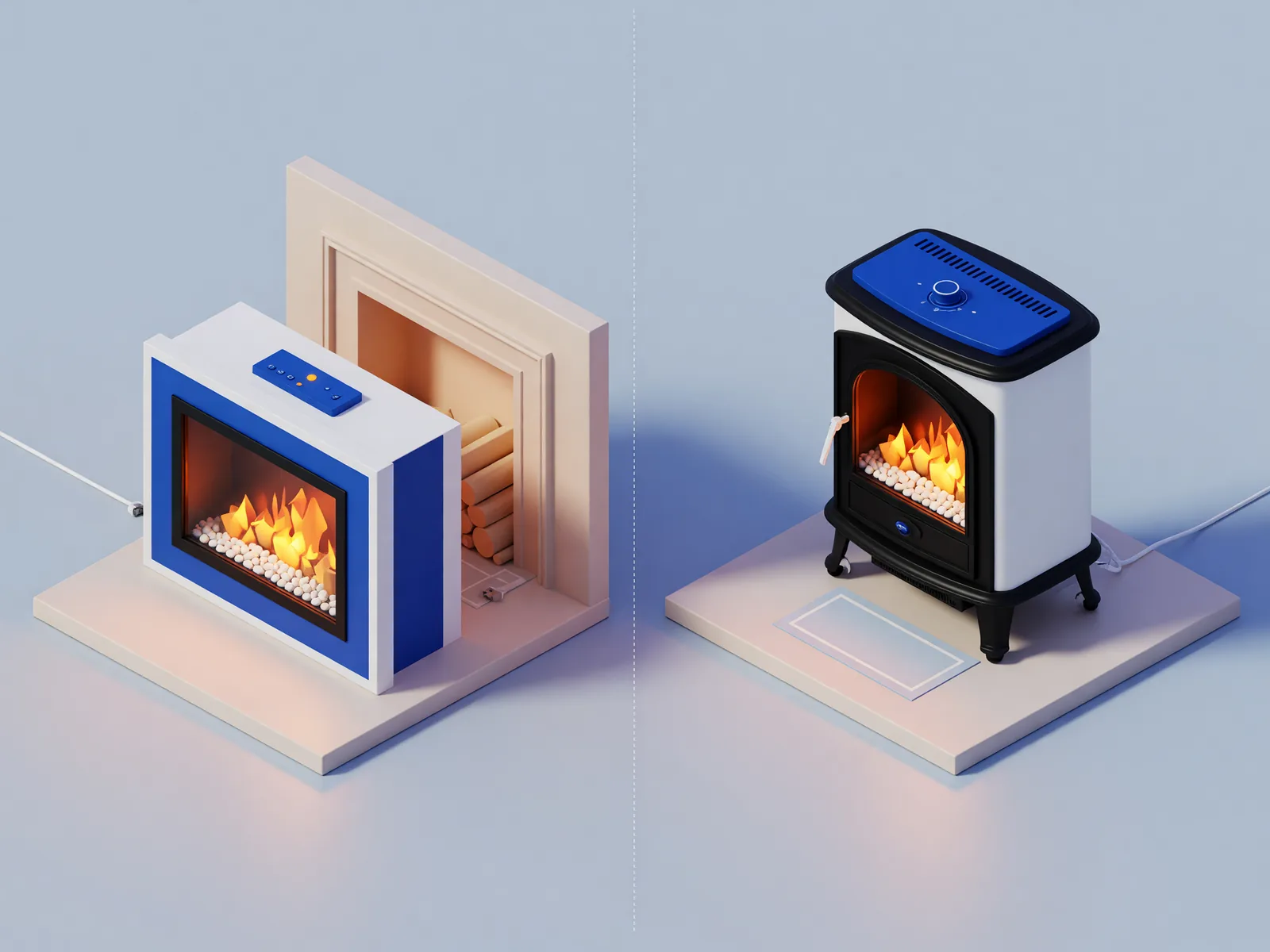
Choosing an electric fireplace insert vs freestanding unit is one of the first decisions most shoppers face. Both styles of electric fireplace give you zone heat and flame effects from a standard outlet, yet they suit very different rooms and lifestyles. This guide breaks down the real differences so you can pick with confidence.
Electric fireplace insert vs freestanding: the core differences
An electric fireplace insert is built to sit inside an existing masonry opening or a custom framed surround. It uses the mantel or surround you already have and presents a clean, built-in face. A freestanding electric fireplace is a complete appliance that stands on its own legs or base. It needs only a flat floor and clearance space, so you can place it almost anywhere.
Both types rely on the same basic technology. Resistance heating elements (fan-forced, infrared, or ceramic) produce warmth while LED or projection systems create the flame show. Most plug into a regular 120V outlet and draw between 1,350 and 1,800 watts on high. That yields roughly 5,100 BTU per hour, enough for supplemental heat in the immediate area rather than whole-house warmth. Flame-only mode sips far less power, usually 50 to 200 watts, so you can enjoy the glow without heat on mild evenings.
The decision therefore rests on installation constraints and looks, not raw heating power. If you already own a non-working fireplace, an insert preserves the architecture. If you live in an apartment or simply want freedom to rearrange, freestanding wins.

Pros and cons electric fireplace insert vs freestanding
Here is a clear side-by-side look at the trade-offs.
Electric fireplace insert advantages
- Seamless built-in appearance that keeps your existing mantel
- Heat directed outward from the hearth into the room
- Often feels more permanent and high-end
- Can convert an inefficient open fireplace into a useful zone heater
Electric fireplace insert drawbacks
- Requires careful measuring of front width, rear width, height, and depth
- Less portable once installed
- May need outlet relocation or light framing work
Freestanding electric fireplace advantages
- True plug-and-play setup in minutes
- Easy to move between rooms or take when you relocate
- Available in stove, cabinet, and mantel styles that double as furniture
- No dependency on an existing opening
Freestanding electric fireplace drawbacks
- Occupies floor space
- Can look less integrated in a formal living room
- Needs clearances on all sides for safety and airflow
If you want the classic hearth look and already have the opening, lean insert. If mobility or a quick setup matters more, choose freestanding.
Electric fireplace insert vs freestanding for existing fireplace
This is the most common scenario that tips the scale. When you have a masonry fireplace that no longer works or simply sits empty, an electric fireplace insert is almost always the smarter path. You measure the firebox at several points because older openings often taper. Typical insert widths run 23 to 36 inches, with depths of 8 to 12 inches or more. Once the unit slides in, the original surround frames it perfectly and the room retains its architectural character.
Electric fireplace insert installation is usually straightforward for plug-in models. You may need to clean the firebox, confirm the outlet is on a dedicated or lightly loaded circuit, and check that at least 8 inches of clearance remains above the unit to any mantel shelf or television. Some homeowners add a simple trim kit for a tighter finish. The result is a clean upgrade that turns dead space into a working electric fireplace heater without the cost of gas lines or chimney work.
Freestanding units can sit in front of an unused fireplace, yet they rarely look as intentional. The gap between the stove and the surround often feels awkward. For existing fireplaces, the insert route delivers better aesthetics and a more directed heat pattern.
One strong insert choice that fits many standard openings is the Electactic 30-inch model. It offers recessed or wall-mounted flexibility, a thermostat, and adjustable flames in a slim profile.
Sizing, heat output, and what the numbers really mean
Most electric fireplaces, whether insert or freestanding, share nearly identical performance envelopes in current models. On high they pull about 1,500 watts and cost roughly 23 cents per hour at average electricity rates of 15 cents per kilowatt-hour. Lower settings around 750 watts give gentler warmth. Manufacturers sometimes claim coverage up to 1,000 square feet, yet realistic spot heating works best within four to five feet of the unit. Think of these as zone heaters that take the chill off a living room or bedroom, not as replacements for central heat.
Flame quality varies more by brand and technology than by form factor. Premium multi-layer LED or projection systems look markedly more three-dimensional than basic single-color ribbons. Adjustable brightness, color, and speed settings are now standard. Many units also include crackling audio, timers, and remotes. Noise levels on well-reviewed models stay low enough that independent testers rate them very good.
Depth is the measurement that trips up insert buyers. Always check the rear of the firebox; a unit that fits the front opening may still bottom out against a sloping back wall. Freestanding models avoid that problem entirely but need floor space and clearance from curtains or furniture.
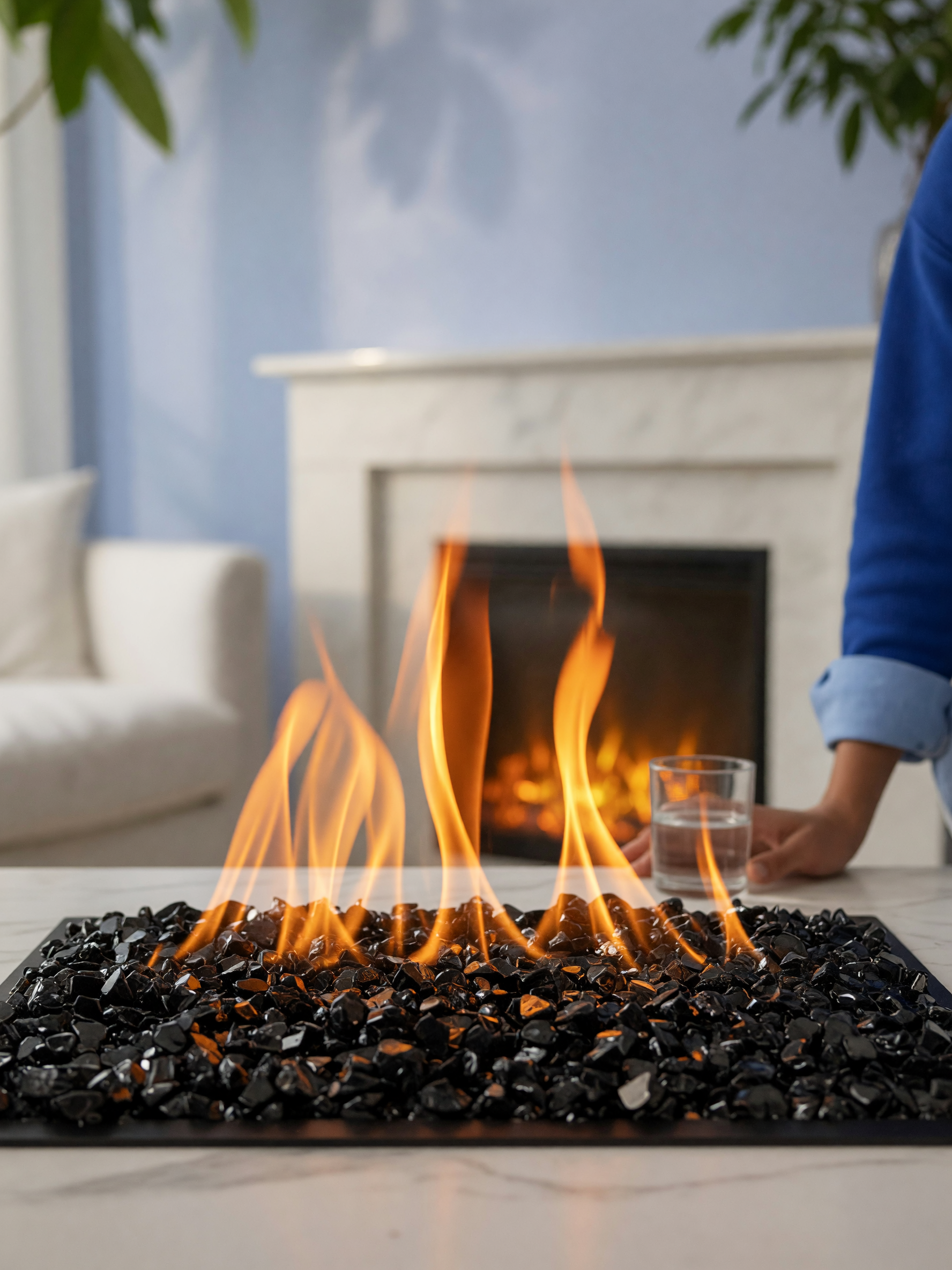
Style paths: wall mount electric fireplace, mantel, and stove looks
Beyond the insert-versus-freestanding split, style options multiply quickly. A wall mount electric fireplace hangs on the wall like a flat-screen and can also recess between studs. These linear models pair especially well with an electric fireplace tv stand or a floating media console. They keep floor space open and create a contemporary focal point.
An electric fireplace with mantel arrives as a complete furniture piece. The mantel shelf holds photos or a television while the firebox sits below. These freestanding cabinet styles work in apartments, bedrooms, or open-concept great rooms where no hearth exists. Stove-style freestanding units lean traditional or cottage and radiate heat in a wider pattern.
If you want a versatile recessed and wall-mounted option that can also serve as a clean modern insert, the R.W.FLAME 30-inch model is worth a look. It fits common 2x4 and 2x6 stud bays, stays quiet, and includes a remote with timer.
Larger spaces sometimes call for a wider linear face. The R.W.FLAME 36-inch version delivers the same low-noise performance in a broader format that suits bigger walls or openings.
Electric fireplace buying guide: placement and safety checklist
Use this quick checklist before you click buy.
- Measure the opening (insert) or available floor area (freestanding) at multiple points
- Confirm a nearby 120V outlet on a circuit that can handle 1,500 watts
- Allow at least 8 inches of clearance above the unit to any mantel or TV
- Decide whether you need heat and flame to operate independently
- Check for remote, thermostat, and timer if those features matter daily
- Verify the warranty covers heating elements and flame components
- Look at high-quality video of the actual flame effect rather than relying on still photos
Electric fireplaces need almost no maintenance beyond occasional dusting of vents and media. There is no chimney sweeping, no ash, and no combustion byproducts. Still, treat them like any other space heater: keep flammable items clear and never run an overloaded power strip.
For pure freestanding convenience with a classic stove silhouette, the ZAFRO model delivers 5,100 BTU, dual heat settings, and a retro cast-iron look that works in cabins or traditional rooms.
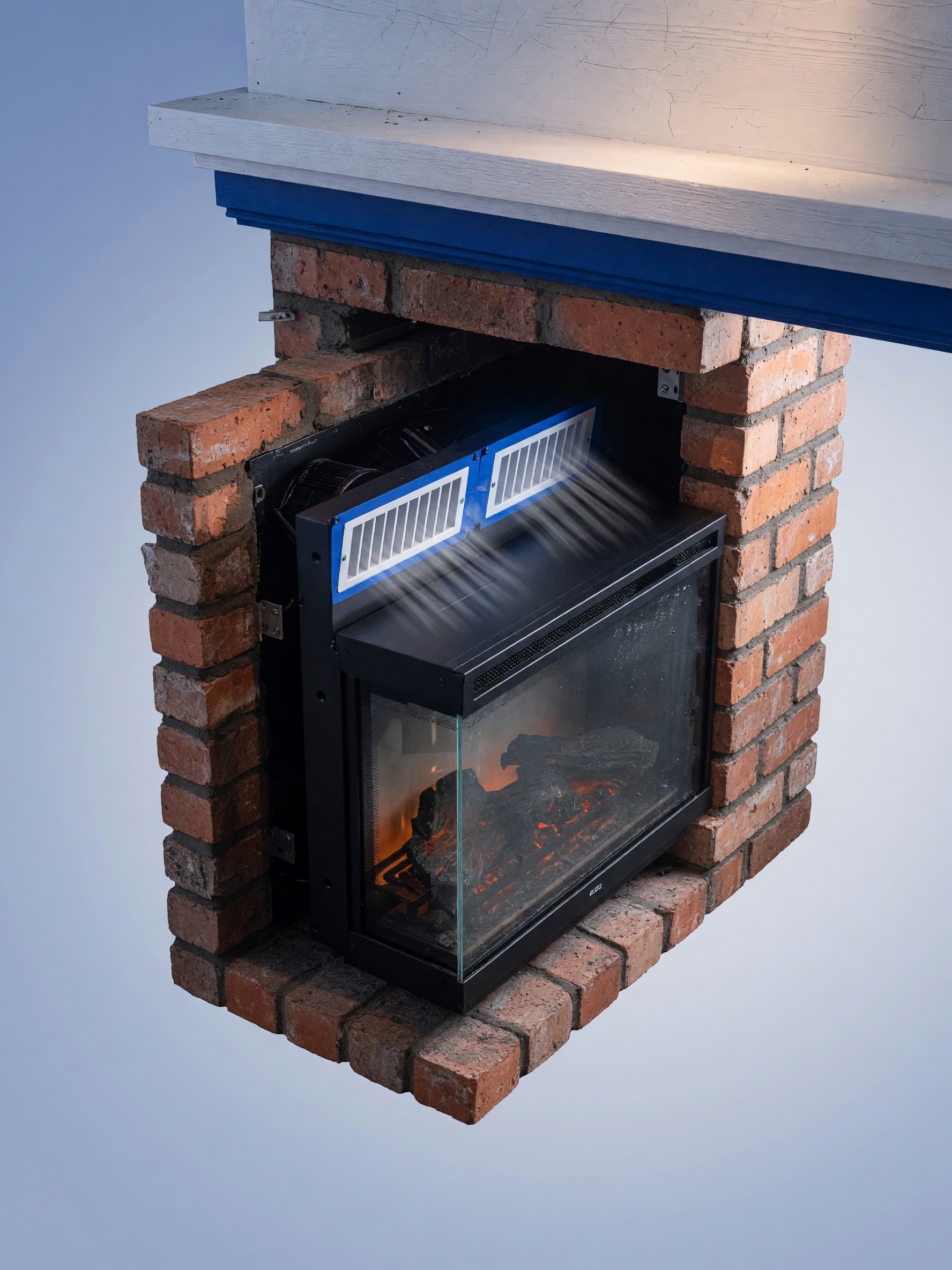
Which is better electric fireplace insert or freestanding for your lifestyle
Ask yourself three practical questions.
Do you already have a fireplace opening you want to keep using? If yes, an insert is almost always the better match. Should I get electric fireplace insert or freestanding if I rent or move often? Freestanding is the clear answer because you can take it with you. Do you want the unit to double as furniture or a media console? Then look at freestanding mantel cabinets or pair a wall mount electric fireplace with a matching electric fireplace tv stand.
Flame realism and quiet operation matter more than minor BTU differences. Current best electric fireplace models emphasize multi-color adjustable flames, smart controls on some premium versions, and the ability to run ambiance without heat. Price ranges from roughly 200 to 900 dollars for quality units; higher cost does not automatically equal better heat, but it often buys richer flame effects.
Common myths still circulate. These units are not primary whole-home heaters. Cheap basic LEDs often look flat compared with layered projection systems. Skipping precise measurements is the fastest way to end up with an insert that will not fit. And while operation is inexpensive, running 1,500 watts for many hours still adds to the electric bill, so treat the heater as supplemental.

The bottom line
The electric fireplace insert vs freestanding choice is really about your existing architecture and how much flexibility you need. Pick an insert when you want a built-in look inside a real fireplace or custom surround. Choose freestanding when you lack an opening, value portability, or prefer a stove or mantel cabinet that stands alone. Heating performance and core features are nearly identical across both categories, so fit, style, and installation ease decide the winner.
For a full ranked shortlist of current models across every style, see our guide to the 10 best electric fireplaces at /electric-fireplaces. Measure twice, match the form factor to your room, and you will end up with an electric fireplace that looks right and works hard for years.
Sources
Research for this article drew on the following sources.
We compared the whole category and ranked the ten best. Prices and picks refresh weekly.