
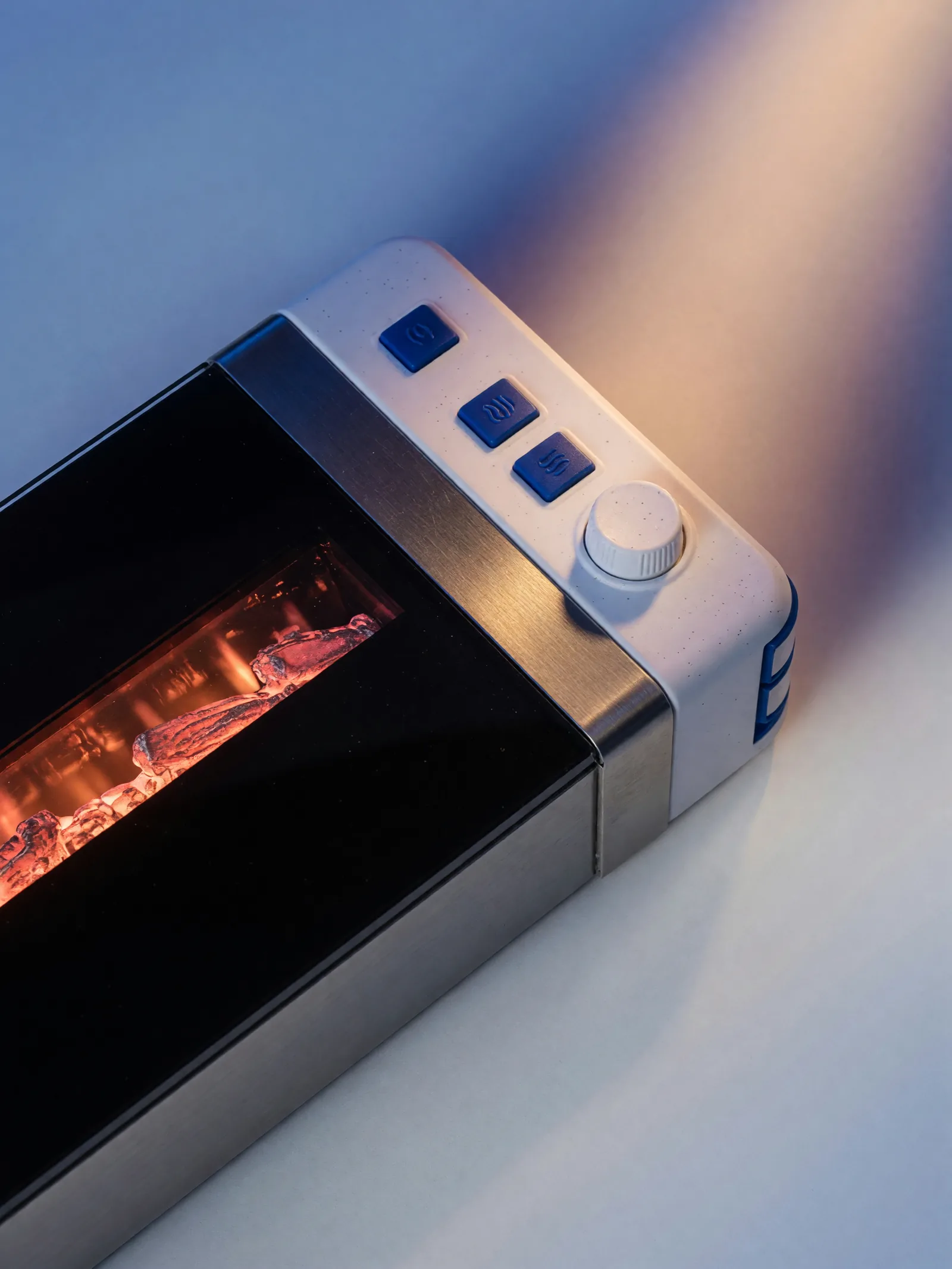
Choosing electric fireplace sizes is simpler than most people expect once you separate heat performance from looks. Measure your room, match BTU output to the square footage you actually want to warm, then pick a width that sits comfortably on the wall. This guide shows exactly how to choose electric fireplace size so the unit feels right and works as intended.
What size electric fireplace do I need for real heat
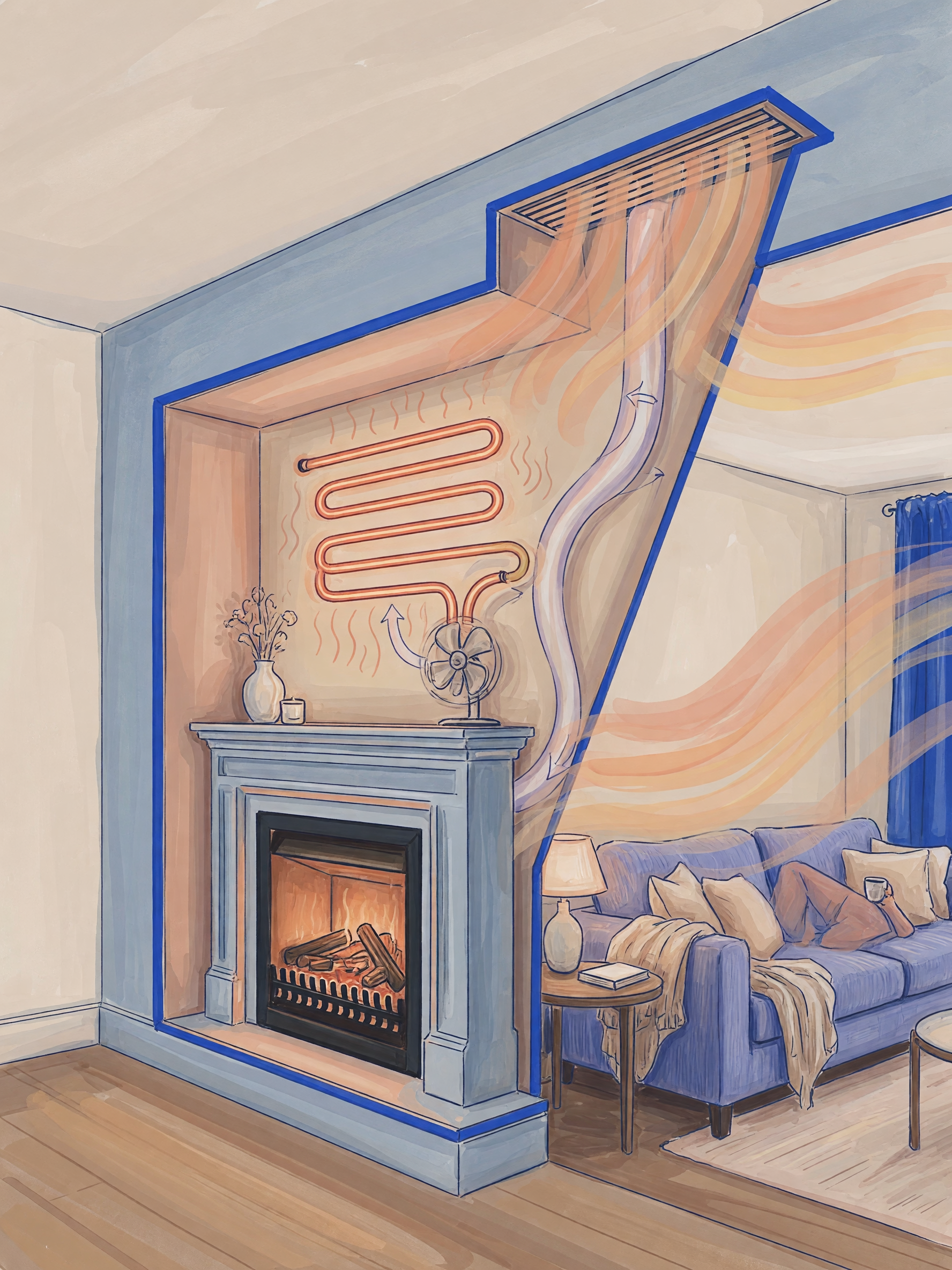
Start with the job you want the fireplace to do. Electric models convert nearly all their electricity into heat through a resistive element, often helped by a fan or infrared quartz tubes. Heat is measured in BTUs. A standard 120-volt plug-in unit on high draws about 1,500 watts and produces roughly 5,118 BTUs. Under typical conditions (8 to 9 foot ceilings and average insulation) that output comfortably covers 250 to 400 square feet as supplemental or zone heat.
A useful rule of thumb is about 20 BTUs per square foot for zone heating, though insulation quality, ceiling height, windows, and open floor plans all change the result. Lower settings usually run around 750 watts or 2,559 BTUs. Higher-output 240-volt or hardwired units can reach 2,500 to 3,000-plus watts (roughly 8,530 to 10,236 BTUs) and stretch toward 600 to 1,000 square feet, but those are less common for everyday plug-in models. Infrared versions sometimes push effective coverage higher still in favorable rooms.
Most units raise the temperature of a room noticeably within 15 to 30 minutes on high. They are excellent for zone heating the space you occupy rather than the whole house, and almost all offer a flame-only mode when you want ambiance without heat.

Electric fireplace BTUs for room size and a simple sizing chart
Use this approximate electric fireplace BTUs for room size chart for supplemental heating needs. Figures assume standard ceiling height; add capacity if ceilings exceed 9 feet or insulation is poor.
- Up to 200 square feet: 4,000 to 9,000 BTUs
- 200 to 400 square feet: 8,000 to 18,000 BTUs
- 400 to 600 square feet: 12,000 to 27,000 BTUs
A quick mental electric fireplace size calculator works like this: multiply your room’s length by width to get square footage, then multiply by 20 for a baseline BTU target. Compare that number to the manufacturer’s stated output. If the room is open to other spaces or drafty, aim higher. If you mainly want flame effect and light spot warmth, you can stay at the lower end of the range.
For an electric fireplace for small room such as a bedroom or home office under 150 square feet, a modest 4,000 to 5,100 BTU unit is usually plenty and avoids overheating. Living areas in the 200 to 400 square foot range pair well with the common 5,118 BTU class. Larger open-concept spaces may need a higher-output model or simply treat the fireplace as visual focus with gentle supplemental heat.
Electric fireplace dimensions and how big should my electric fireplace be
Heat is only half the decision. Electric fireplace dimensions must also look balanced on the wall. A reliable visual rule is to choose a unit whose width occupies roughly two-thirds to three-quarters of the available wall space or mantel opening. Too narrow and the fireplace disappears; too wide and it overwhelms the architecture.
Room-by-room visual reference for standard 8-foot ceilings:
- Small bedroom or office (120 square feet or less): 28 to 42 inches wide
- Medium living room or den (150 to 300 square feet): 36 to 60 inches wide
- Large or open room (300-plus square feet): 60 to 80 inches or longer linear styles
Always measure the clear wall width first, then check depth and height clearances. Most wall-mount and recessed models need about 3 feet of open space in front and 1.5 feet on the sides, plus proper spacing if a television sits above. Outlet location matters too; standard units use ordinary 120-volt receptacles while high-output models may need a dedicated circuit or 240-volt hardwiring.

Best electric fireplace size for living room and other common spaces
The best electric fireplace size for room type depends on both traffic and enclosure. In a typical living room the 36 to 50 inch range often strikes the right balance of presence and proportion. A 36-inch recessed model works cleanly above a low media console or in a modest mantel, while a 42- or 50-inch linear unit fills a longer feature wall without crowding.
For a medium living space consider a versatile 36-inch option that mounts on the wall or recesses into standard stud bays:
Bedrooms and offices favor quieter operation and smaller footprints. A 30-inch unit delivers enough warmth for personal comfort and keeps the scale intimate:
Open-concept great rooms or long feature walls benefit from wider linear designs. A 50-inch ultra-thin model provides strong visual weight and solid supplemental heat:
If you rent or simply prefer zero installation, a freestanding stove-style unit gives classic looks and the same roughly 5,100 BTU output without touching the walls:
How to choose electric fireplace size with a practical checklist
Work through this short electric fireplace sizing checklist before you buy:
- Calculate room square footage (length times width).
- Decide primary use: zone heat, occasional spot warmth, or flame only.
- Match BTU output to the square-footage ranges above, adjusting for insulation and ceiling height.
- Measure usable wall width and apply the two-thirds to three-quarters rule.
- Confirm power: standard 120-volt outlet versus need for dedicated or 240-volt circuit.
- Check clearances for people, furniture, mantel, and any TV above.
- Note noise preference (some fans are quieter) and whether you want a thermostat, timer, or remote.
- Verify the unit can run flame effect without heat.
This process is essentially a manual electric fireplace size calculator and removes most guesswork.
Electric fireplace size guide for special situations
Open floor plans reduce effective coverage because heat migrates. Place the unit centrally if possible and expect to treat it as zone comfort rather than whole-area heat. Rooms with many windows or exterior doors lose heat faster; bump your BTU target upward. High ceilings above 9 feet also increase volume, so larger output or a second unit may be needed.
Rentals and apartments almost always favor plug-in wall-mount or freestanding designs that leave no permanent marks. Covered outdoor or three-season spaces require weather-rated models specifically listed for that use. In every case read the exact manufacturer specifications for the model you choose; stated coverage assumes average conditions.
Common electric fireplace sizing mistakes to avoid
Several errors appear repeatedly. Treating an electric fireplace as primary whole-home heat in a cold climate is unrealistic; these units excel at zone heating and can lower bills by warming only occupied rooms, yet a central system remains more efficient for large or poorly insulated houses. Ignoring proportions leaves the fireplace looking either lost or overpowering. Overlooking electrical needs can mean an unused high-output unit or a tripped breaker. Assuming every heater feels the same overlooks the difference between fan-forced air and infrared radiant warmth. Finally, skipping clearance checks creates safety and warranty issues.
Current guidance from hearth specialists and retailers continues to emphasize realistic zone-heating expectations, measuring wall space and outlet access first, and choosing features such as thermostats and safety shutoffs. Slim recessed designs make modern retrofits easier, while infrared and 240-volt options expand coverage for bigger rooms.

The bottom line
Electric fireplace sizing comes down to two matched decisions: BTU output that suits your room’s square footage for the heat level you want, and physical width that occupies about two-thirds to three-quarters of the available wall. Standard 5,118 BTU plug-in models handle most 250 to 400 square foot spaces well, smaller rooms need less, and larger open areas may call for higher output or a wider linear design. Measure carefully, respect clearances and power requirements, and the unit will look intentional and perform as supplemental heat or pure ambiance whenever you want it.
When you are ready to compare specific models side by side, see our full ranked list of The 10 Best Electric Fireplaces at /electric-fireplaces for current favorites across every common size and style.
Sources
Research for this article drew on the following sources.
We compared the whole category and ranked the ten best. Prices and picks refresh weekly.