
Choosing the right unit starts with a clear air purifier buying guide that focuses on performance, not packaging claims. Understanding what features should I look for when buying an air purifier helps you cut allergens, smoke, and dust without wasting money on gimmicks. Below is a practical walkthrough of the specs that actually move the needle so you can shop with confidence.
What to look for in an air purifier: the core checklist
Before you compare models, lock in the non-negotiables. Experts from the EPA, Consumer Reports, and long-term testers agree on a short list of air purifier features that deliver real particle removal while keeping daily use livable.
- True HEPA filtration that captures at least 99.97 percent of 0.3 μm particles
- Adequate Clean Air Delivery Rate matched to your space
- Noise low enough for bedrooms or offices (ideally under 50 dB on medium)
- Activated carbon for odors, gases, and VOCs
- Energy Star or low-wattage draw for 24/7 running
- CARB certification confirming ozone stays below 0.05 ppm or is absent
- Simple filter-life indicators so maintenance stays on schedule
Skip ionizers, ozone generators, UVGI-only designs, photocatalytic oxidation, and anything labeled “HEPA-type” or “HEPA-like.” Independent tests show these often underperform or create lung irritants. Mechanical filtration plus a strong fan remains the proven path.
How to choose an air purifier by CADR and room size
Is CADR important for air purifiers? Yes. CADR (Clean Air Delivery Rate) tells you how many cubic feet of clean air the unit delivers per minute for smoke, dust, and pollen. A higher CADR air purifier cleans faster and supports the four or more air changes per hour that specialists recommend for noticeable results.
Match the number to your air purifier room size using EPA guidance for an 8-foot ceiling:
- 100 sq ft needs at least 65 cfm
- 200 sq ft needs 130 cfm
- 300 sq ft needs 195 cfm
- 400 sq ft needs 260 cfm
Aim higher if you deal with wildfire smoke or want quicker recovery after cooking. Always check AHAM Verifide seals or independent chamber data; manufacturer square-footage claims are frequently optimistic. For open-plan living areas above 350 to 500 sq ft, either step up to a 300-plus cfm model or run two smaller units.
A compact, verified option that balances CADR and price for everyday rooms is worth a look.
Why a HEPA air purifier is non-negotiable
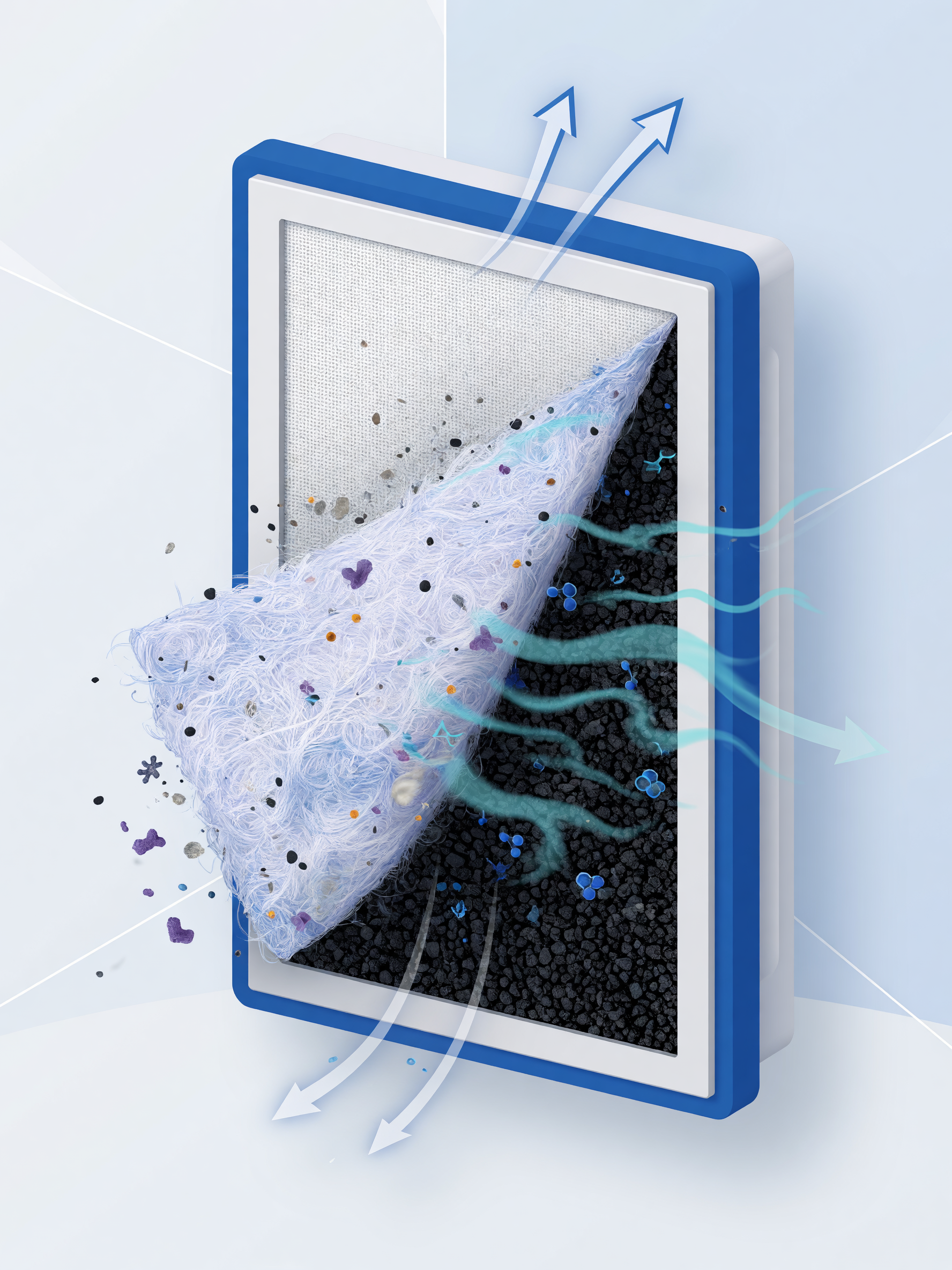
A true HEPA air purifier uses mechanical interception, impaction, and diffusion to trap particles. At the most penetrating particle size of 0.3 μm it must remove 99.97 percent; it often does even better on both larger dust and smaller particles such as some viruses. That performance directly targets the allergens, pet dander, smoke, and fine particulate that drive most indoor air complaints.
Look for “True HEPA,” H13, or H14 ratings. Pair the HEPA stage with a substantial activated-carbon layer if odors, cooking fumes, or VOCs are part of your problem. Carbon saturates faster than the particle filter, so plan on more frequent swaps when pets or smoke are present.
For households focused on allergens and pets, a hospital-grade HEPA 14 design that covers larger floor areas delivers the particle capture you need.
Air purifier noise level: finding a quiet air purifier you will actually run
An air purifier noise level under 50 dB on medium or sleep settings sounds like a quiet refrigerator or soft conversation. That range lets the unit run continuously in a bedroom or living room without competing with TV dialogue or sleep. Top performers stay well below the mark on everyday speeds; turbo modes can climb to 55,65 dB and are best reserved for short bursts after vacuuming or during heavy smoke events.
When you evaluate a quiet air purifier, read the decibel figures for low and medium, not just the marketing “whisper-quiet” claim. Place the unit a few feet from the bed or desk and give preference to models with a dedicated sleep mode that dims lights and drops fan speed automatically.
Filter maintenance and air purifier filter replacement cost
Filters are consumables. Budget for them up front so the machine does not become an expensive paperweight. Typical true HEPA cartridges last 6 to 12 months and cost $50 to $200. Activated carbon often needs replacement every three months at roughly $50. Annual ownership (electricity plus filters) commonly lands between $50 and $150 depending on local rates and how hard you run the unit.
Models with filter-life indicators or app reminders remove the guesswork. Keep a spare set on hand so you never run the fan with a clogged filter, which tanks both CADR and energy efficiency. Pre-filters that vacuum or rinse clean stretch the life of the more expensive stages.
Air purifier energy efficiency for all-day use
Because the best results come from continuous operation, air purifier energy efficiency matters. Energy Star certified units use about 40 percent less power than standard models. Good everyday performers draw only 5 to 50 W on medium. Over a year that difference adds up, especially if you place units in several rooms.
Check the wattage on low and medium rather than the maximum turbo figure. Lower draw also means less heat output in summer. Pair efficiency with solid CADR so you are not forced to run a weak machine on high just to keep up.
Smart air purifier features and when they help
Smart air purifier features such as app control, auto mode tied to a particle sensor, scheduling, and filter alerts add convenience once the core filtration and CADR are solid. Auto mode is especially useful: the unit ramps up when it detects a spike from cooking or outdoor smoke, then drops back to quiet levels. Wi-Fi models let you start cleaning before you get home.
These extras are secondary. A basic, well-sized HEPA unit that you actually leave on will outperform a connected gadget with weak airflow. Still, if you like data and remote control, look for reliable app ratings and local control buttons that work when the network is down.
One larger-room model that adds Wi-Fi, sleep mode, and child lock while keeping H13 HEPA filtration is a practical example of useful smart touches.

Best air purifier features for allergies and specific situations
The best air purifier features for allergies center on high CADR plus true HEPA, placed in the bedroom where you spend the most consecutive hours. That combination is also the foundation of any best air purifier for allergies shortlist. Run the unit on medium overnight and keep doors closed for maximum effect.
- Allergies or asthma: prioritize smoke and pollen CADR numbers, true HEPA, and low noise
- Wildfire or tobacco smoke: highest available smoke CADR, run high at first then settle to medium
- Pets and odors: thick carbon bed plus HEPA; expect more frequent carbon changes
- Large or open spaces: 300-plus cfm or multiple units; measure actual volume including ceiling height
- Small bedrooms or dorms: compact footprint, sub-50 dB sleep mode, low wattage
Source control still comes first: no indoor smoking, regular vacuuming with a HEPA vacuum, and reducing clutter that holds dust. An air purifier supplements ventilation and cleaning; it does not replace them.
For tighter spaces that still need solid allergen performance and quiet overnight running, a smaller AHAM-verified bedroom unit with a 3-in-1 filter stack is often the sweet spot.
Common mistakes that waste money
- Trusting “HEPA-type” wording or ozone-based claims
- Buying solely on advertised room size without checking CADR
- Ignoring filter replacement cost until the first change is due
- Running the unit only on high, then shutting it off because of noise
- Expecting the purifier to pick up settled dust (vacuuming is still required)
- Skipping CARB certification in states that regulate ozone
Cross-check any shortlist against AHAM data or reputable lab results, calculate your real room volume, and set a yearly filter budget before you click buy.
The bottom line
Focus on true HEPA, a CADR that delivers at least four air changes per hour in your actual space, noise under 50 dB for daily settings, activated carbon when gases matter, proven low energy use, and honest maintenance costs. Everything else is secondary. Avoid unproven add-ons and oversized marketing claims, and you will end up with a machine that quietly improves the air you breathe every day.
For side-by-side picks that already meet these standards, see our ranked list of The 10 Best Air Purifiers at /air-purifiers and choose the model that fits your room and budget.
Sources
Research for this article drew on the following sources.
We compared the whole category and ranked the ten best. Prices and picks refresh weekly.