
Figuring out what size air purifier do I need comes down to matching your room’s floor area to a verified Clean Air Delivery Rate rather than trusting vague box claims. This air purifier sizing guide shows you the exact method experts use so you can pick a unit that actually clears particles instead of just circulating them. Follow the steps below and you will know how big of an air purifier do i need for any space in your home.
Air purifier room size guide: measure first
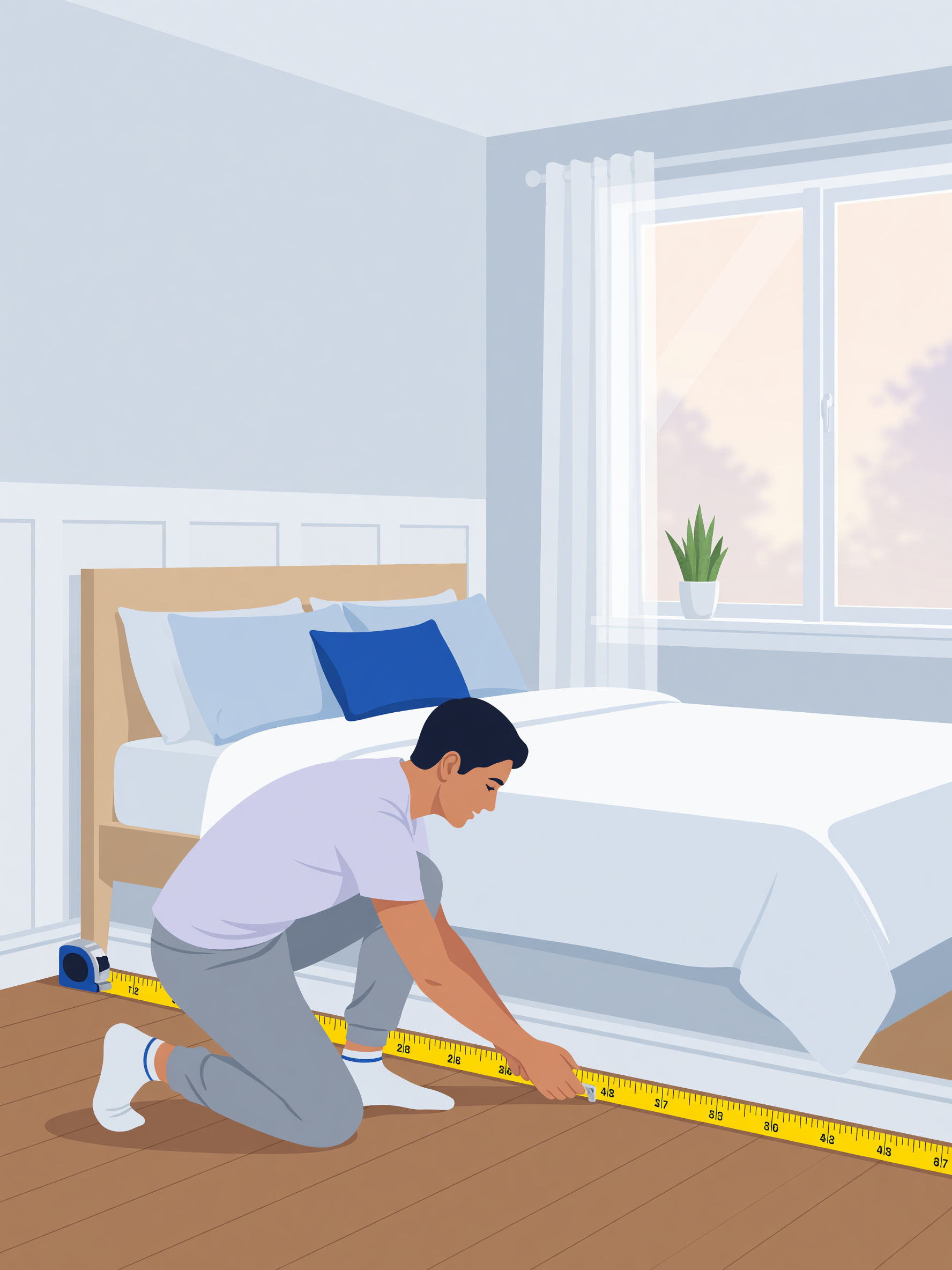
Before you shop, grab a tape measure and calculate room size for air purifier use the simple way. Multiply length by width to get square footage. Standard guidance assumes 8 foot ceilings. If your ceilings are taller, you will scale the required performance upward later.
A typical bedroom might be 10 by 12 feet, or 120 square feet. A living room could easily hit 300 square feet. Write the number down. That single figure drives every later decision in this air purifier room size guide.
Open floor plans or rooms that flow into hallways need special care. Treat the entire connected area as one space or plan on multiple units. Undersizing is the most common reason people decide an air purifier “doesn’t work.”
Why air purifier CADR is the real sizing number
Manufacturers love to print oversized square-footage claims on the box. Those numbers often assume only one or two air changes per hour, which is too slow for meaningful cleaning. The reliable metric is CADR, or Clean Air Delivery Rate, expressed in cubic feet per minute.
CADR is independently tested under ANSI/AHAM AC-1 standards and appears on the AHAM Verifide label. You will see three scores: tobacco smoke, dust, and pollen. Smoke CADR matters most because it tracks the smallest particles, including PM2.5 and wildfire smoke.
The AHAM two-thirds rule is straightforward. Choose a smoke CADR that is at least two-thirds of your room’s square footage. For a 200 square foot room you need roughly 133 CFM smoke CADR. The EPA publishes a matching table: 100 square feet needs at least 65 CFM, while 300 square feet needs at least 195 CFM.
Air purifier room size calculator steps you can do in your head
You can treat the two-thirds rule as a quick air purifier room size calculator. For more precision, aim for 4.8 to 6 air changes per hour. The formula is simple: (CADR × 60) divided by room volume in cubic feet. Volume equals square footage times ceiling height.
A 200 square foot room with 8 foot ceilings holds 1,600 cubic feet. Hitting 5 air changes per hour requires about 133 to 160 CFM. That lines up neatly with the AHAM rule. Higher CADR units let you run the fan on a quieter medium setting and still exceed the minimum.
If you want a cadr calculator air purifier approach for nonstandard ceilings, multiply the required CADR by (actual height ÷ 8). An 11 foot ceiling multiplies the target by 1.375. Keep a note of your final number when you compare models.
How to choose air purifier by room size for bedrooms and living areas
Sleep spaces reward quiet operation and solid dust or pollen CADR. Look for units that stay under 50 dB on lower speeds, roughly the sound of a refrigerator. Four to five air changes per hour is plenty for overnight use.
For a standard air purifier for bedroom size around 120 square feet, a smoke CADR of 80 CFM or higher is the floor. Compact AHAM Verifide models handle this easily and often include a sleep mode.
That Levoit unit carries AHAM Verifide ratings and is a practical match for bedrooms, offices, or nurseries where noise and verified performance both matter.
Living rooms and open areas demand more airflow. Pets, cooking, and foot traffic raise particle loads, so lean toward higher smoke CADR and a substantial carbon filter if odors are an issue. Large-room models rated well above the two-thirds minimum give you headroom to run quieter.
What size air purifier do I need for my bedroom specifically
Many shoppers type “what size air purifier do I need for my bedroom” and then get lost in feature lists. Stick to the math. Measure the room, apply the two-thirds rule, then filter the remaining options for noise and filter cost.
A second compact option that still carries AHAM verification works well when you want something smaller for a dorm or guest room.
Its three-in-one filter and modest footprint make it easy to place on a nightstand or shelf without dominating the space. Run it on low overnight and you will still meet the air-change target for most bedrooms.
What size air purifier for 300 sq ft room and bigger spaces
A 300 square foot living room needs at least 195 CFM smoke CADR under the AHAM rule. Many shoppers ask exactly “what size air purifier for 300 sq ft room” because living areas are where underpowered units fail most visibly. Going bigger than the minimum lets the purifier work less hard and stay quieter.
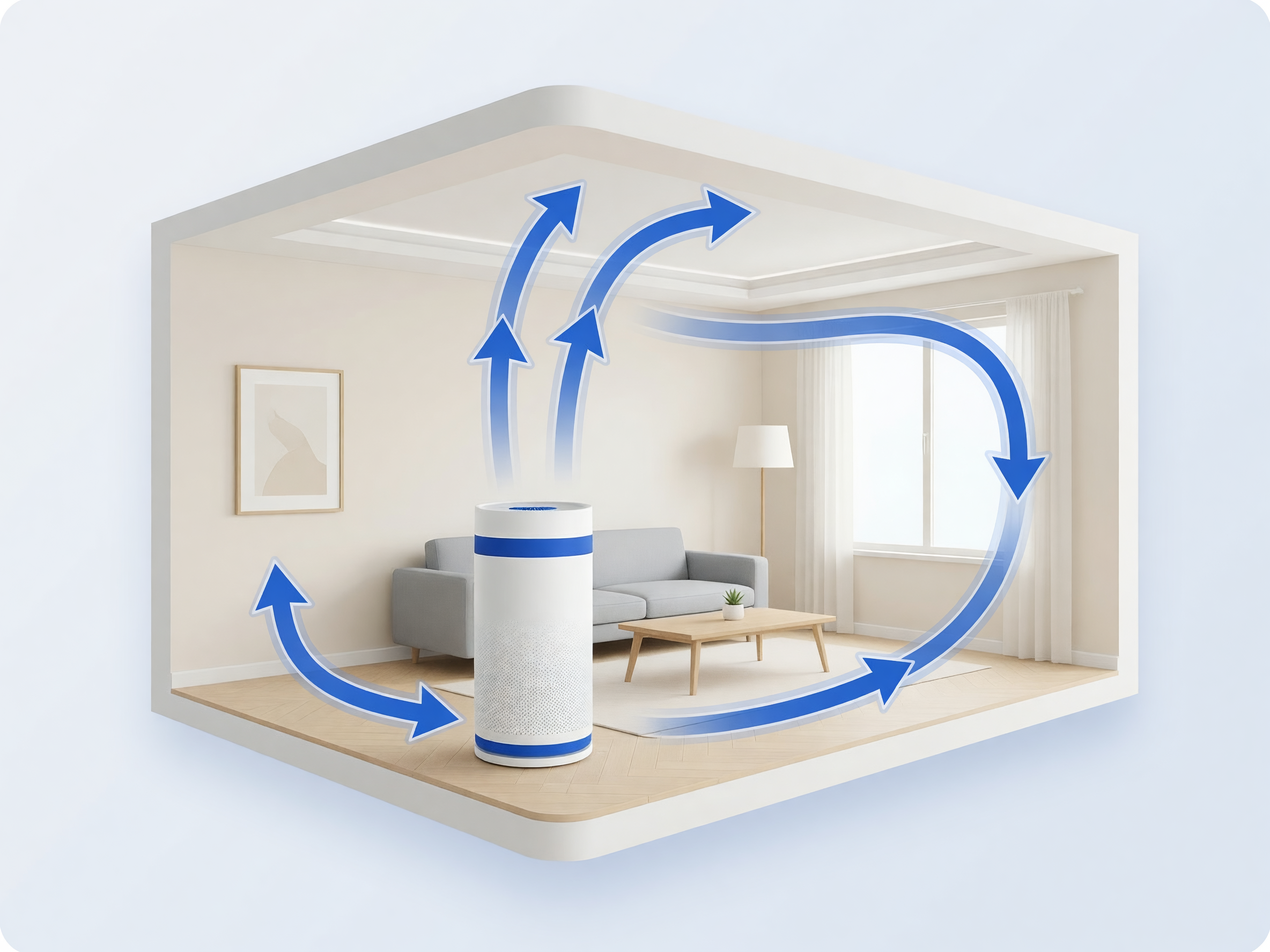
For rooms approaching or exceeding 500 square feet, or for homes fighting wildfire smoke, match or exceed the full square footage in smoke CADR and run the unit continuously. One strong performer designed for large coverage is worth considering here.
The PuroAir model lists coverage well over 1,000 square feet and uses a HEPA 14 filter, giving you the extra capacity that open-plan spaces and high particle days demand.
How many air purifiers for whole house coverage
One portable unit cannot clean an entire home. Air does not travel well through closed doors or long hallways. The practical answer to how many air purifiers for whole house is one properly sized unit in each major occupied room: bedrooms, living room, and home office.
You can also upgrade a central HVAC system with MERV-13 or higher filters. Remember that the furnace fan usually runs less than 25 percent of the time, so portables still carry most of the daily load. Combining both approaches gives the steadiest particle reduction.

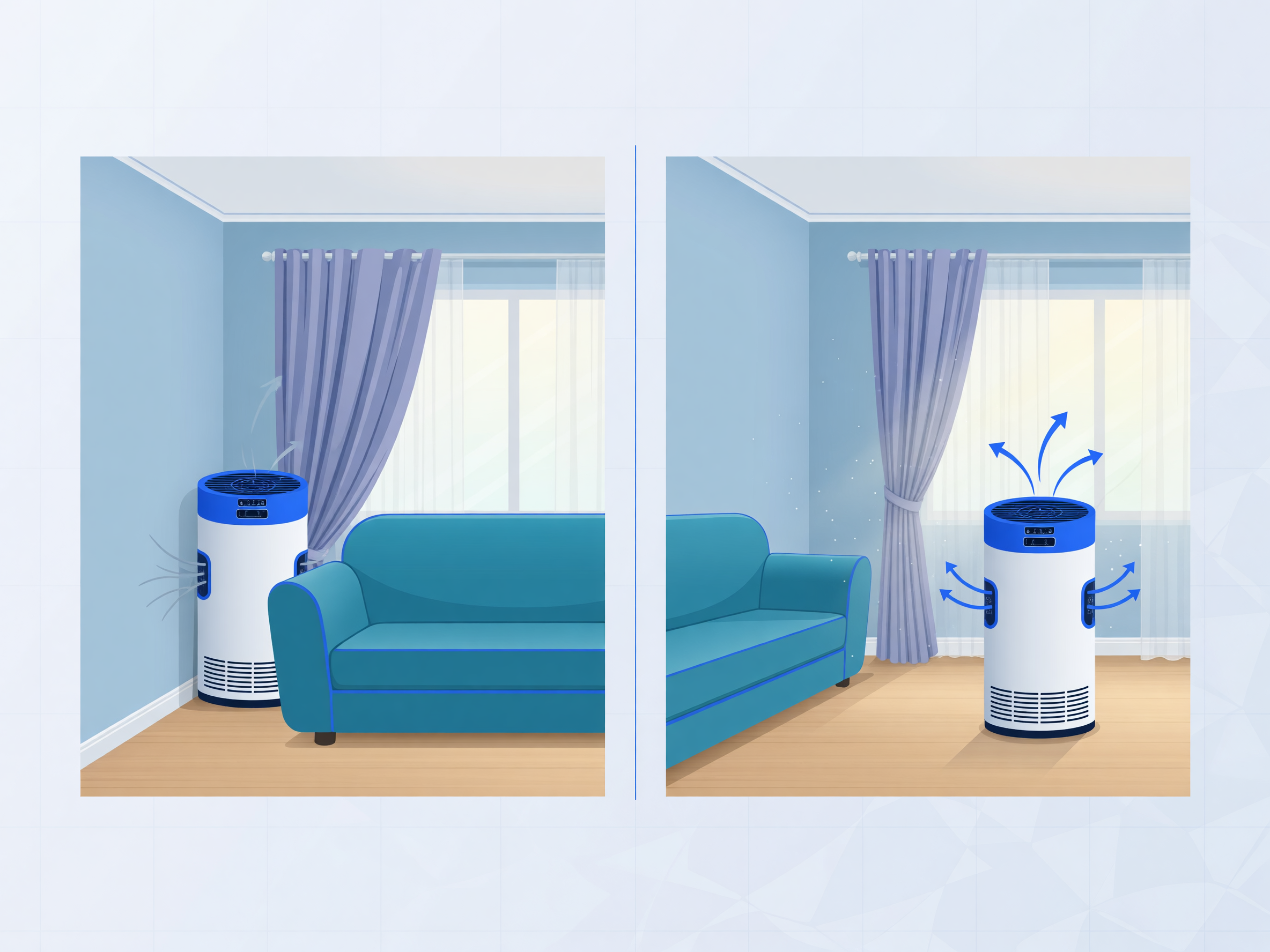
Place each unit where air can move freely. Center of the room or at least three feet from walls and furniture is ideal. Corners and behind sofas choke performance no matter how high the CADR.
Air purifier sizing checklist and common mistakes to avoid
Use this quick checklist before you buy:
- Measured square footage of the actual room, not the whole house
- Smoke CADR at least two-thirds of that footage (or higher for smoke events)
- Ceiling height adjustment if over 8 feet
- AHAM Verifide label confirmed
- Noise level under 50 dB if the unit will run in a bedroom
- Realistic filter replacement cost
- Placement plan that keeps intakes and outlets clear
Common mistakes include trusting the manufacturer’s room-size claim without checking CADR, ignoring open floor plans, and forgetting that clogged filters slash output. Avoid ozone generators and ionizers that produce ozone; they are not a substitute for true filtration. Tabletop novelties rarely move enough air for anything larger than a closet.
Independent testers and the EPA both stress that a well-sized HEPA purifier can cut indoor PM2.5 by roughly half to 60 percent when used correctly. That benefit disappears if the unit is too small or poorly maintained.
The bottom line
What size air purifier do I need is answered by one reliable number: smoke CADR at least two-thirds of your room’s square footage for standard ceilings, scaled up for taller rooms or heavier pollution. Use the air purifier room size calculator logic above, prioritize AHAM Verifide models, and place the unit where air can circulate. Do that and you will get the particle reduction you paid for.
For side-by-side performance notes, noise real-world impressions, and current pricing on the models that meet these sizing rules, see our full ranked list of the 10 best air purifiers at /air-purifiers.
Sources
Research for this article drew on the following sources.
We compared the whole category and ranked the ten best. Prices and picks refresh weekly.